Bach’s Weimar Cantatas
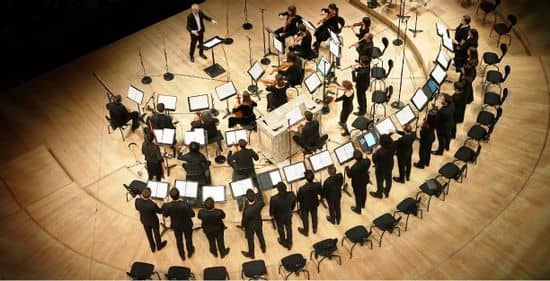
Following an initial program dedicated to Bach’s very first cantatas, composed during his time as Kapellmeister in Mulhouse, the Correspondances ensemble continues its exploration of Johann Sebastian Bach’s work with the second milestone in the young composer’s life: his arrival in Weimar.
Weimar was actually more of a return: when he was just 18, he held his first job there as a “footman and violinist” in the orchestra of the Duke of Weimar’s brother. There, he made a name for himself as an organist, which led to him securing the Arnstadt organist position a few months later. It is clear that this first position would not last very long either: dissatisfied with the choir, this young musician’s constant complaints, combined with his altercations with other musicians and his unilateral decision to take a four-month leave of absence to visit the great Dietrich Buxtehude, had greatly irritated the clergy…
In the fall of 1707, he arrived in Mulhouse to take up the post of organist. It was in that year that his first cantata was composed, marking the beginning of a monumental cycle that would, three centuries later, lead to his being directly associated with the genre. His relations with his superiors were excellent, but the rise of a puritanical pietism that scorned music led Bach to believe that the time had come to leave: he went to Weimar in search of a new position.
In 1708, he became organist and first concertmaster at the Duke of Weimar’s court. For nearly ten years, this court provided him with musical resources befitting his patron: singers, instrumentalists, and a grand organ, for which he regularly composed. Beginning in 1713, he was tasked with composing one cantata per month. In 1714, he composed three major cantatas.
The first of these, Ich hatte viel Bekummernis (BWV 21), may have been composed as early as Mühlhausen, but it was in Weimar in June 1714 that the cantata premiered, before being performed several times until Bach moved to Leipzig. Bach used this work to apply for certain positions; it was likely one of the pieces he was most proud of. It is also one of the most elaborate works in his entire oeuvre (over 40 minutes). The text, centered on the Christian’s suffering, gives rise to heart-wrenching melodies and harmonies.
In April 1714, he composed Weinen Klagen Sorgen, the most famous of the three, reworked for the Crucifixus of the Great Mass in B minor. The emotional power of this grand chorus amplifies the “tears, lamentations, torments, and despair” of the opening words of Solomon Franck’s text.
Finally, we turn to Erschallet, ihr Lieder (BWV 172), a cantata premiered in May 1714 that depicts the tears of the sinner. According to Alfred Dürr, this was also one of the composer’s favorite cantatas, which he performed on numerous occasions, even after moving to Leipzig. The brilliant orchestration and the virtuosity of the choir make this a hymn of joy, a celebration of community through music: “Let your songs ring out, let your strings vibrate! O blessed hours! May God prepare our souls to enter His temple!”.